
The digital landscape is currently shifting underneath the feet of business owners and marketers alike. For years, the gold standard of online visibility was Search Engine Optimization (SEO). However, with the integration of artificial intelligence into platforms like Google, Bing, and OpenAI, a new discipline has emerged: Generative Engine Optimization (GEO).
As search engines evolve into “answer engines,” the way content is discovered and cited is changing. For businesses in Prescott, AZ, staying ahead of this curve is no longer optional—it is the key to maintaining a competitive edge in a world where AI provides the answers.
What Is Generative Engine Optimization (GEO)?
Generative Engine Optimization (GEO) is the process of optimizing website content to be accurately captured, cited, and summarized by AI-powered search engines and generative models. While traditional SEO focuses on ranking in a list of blue links, GEO marketing focuses on becoming the “source of truth” that an AI uses to generate its response.
In digital marketing, GEO represents a shift from keyword-centric strategies to intent-and-authority strategies. It is about ensuring that when a user asks an AI a question—such as “Who is the best SEO expert in Prescott?”—your business is the one the AI recommends.
How Generative Engines Work
To understand GEO, one must understand how tools like Google Gemini, SearchGPT, and Perplexity operate. These systems utilize Large Language Models (LLMs) paired with a process called Retrieval-Augmented Generation (RAG).
- Retrieval: The AI crawls the web to find relevant, high-quality information related to a user’s query.
- Synthesis: The AI reads multiple sources, including blogs, reviews, and data sets.
- Generation: The AI writes a unique, conversational response, often providing citations or links to the sources it used.
By optimizing for GEO, you are essentially making your content easier for these models to digest and trust.
GEO vs. Traditional SEO: What’s the Difference?
While GEO and SEO share common ground—like the need for high-quality content—their goals differ significantly:
| Feature | Traditional SEO | Generative Engine Optimization (GEO) |
|---|---|---|
| Primary Goal | Ranking #1 on a Search Engine Results Page (SERP). | Being cited as a primary source in an AI response. |
| Success Metric | Click-Through Rate (CTR) and organic traffic. | Brand mentions, AI citations, and “share of model.” |
| Content Focus | Keywords, backlinks, and technical performance. | Direct answers, structured data, and authority. |
| User Experience | Browsing through a list of websites. | Receiving a definitive, conversational answer. |
Why GEO Matters in 2026 and Beyond
As we move deeper into 2026, the way consumers in the Quad Cities area find services is becoming more fragmented. A homeowner in Prescott might not click through ten websites to find a contractor; they might simply ask their phone, “Which Prescott painting contractor has the best warranty for exterior home painting?”
If your website isn’t optimized for generative search, you risk becoming invisible to a growing segment of the market. Quad Cities Design specializes in bridging this gap, ensuring that local Prescott businesses aren’t just ranking, but are being featured as the top recommendation by AI engines.
 s
s
Key Elements of Generative Engine Optimization
Optimizing for AI requires a different tactical approach than traditional search. Here are the core pillars of a successful GEO strategy.
Clear, Direct Answers to Common Questions
Generative engines prioritize content that gets straight to the point. If a blog post meanders for five paragraphs before answering the primary question, an AI model may skip it in favor of a competitor who provides a concise, authoritative answer in the first sentence.
Structured Content (Headings, Lists, and Tables)
AI models love structure. Using proper H2 and H3 tags, bulleted lists, and data tables makes it significantly easier for an LLM to parse your data and present it to the user. This is why on-page SEO remains a critical foundation for GEO success.
Establishing Topical Authority and E-E-A-T
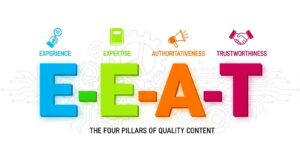
Google and AI models alike look for Experience, Expertise, Authoritativeness, and Trustworthiness. To win at GEO, a website must demonstrate that it is a leader in its niche. For a Prescott-based agency like Quad Cities Design, this means showcasing deep knowledge of local market trends and technical digital marketing expertise.
Entity Optimization and Semantic Relevance
AI doesn’t just look for keywords; it looks for “entities” (people, places, things) and the relationships between them. Optimizing for GEO involves using related terms (LSI keywords) that provide context. For example, a page about “Prescott SEO” should naturally mention “Yavapai County,” “local business growth,” and “Google Business Profile.”
Use of Schema Markup and Structured Data
Schema is the “language” of AI. By implementing LocalBusiness, FAQ, and Article schema, you provide a clear roadmap for generative engines to understand exactly what your business offers, where you are located in Prescott, and why you are credible.

How to Optimize Content for GEO
If you want your content to be the foundation of an AI’s answer, you need to write for both humans and machines.
Writing Concise, Answer-Focused Paragraphs
Adopt the “Inverted Pyramid” style of writing. Put the most important information—the answer to the user’s query—at the very beginning. This increases the likelihood of being selected as a featured snippet or an AI citation.
Using Natural Language and Conversational Tone
Generative AI is designed to mimic human conversation. Writing in a natural, friendly, and confident voice helps your content align with the “tone” that AI engines look for when generating their own responses.
Creating AI-Friendly FAQ Sections
FAQs are goldmines for GEO. By mirroring the exact questions users ask (e.g., “How much does SEO cost in Prescott, AZ?”), you create a perfect entry point for an AI model to pull your text directly into its output.
Updating Old Content for Generative Search
GEO isn’t just for new posts. Auditing existing pages on your site to add clearer headings, updated data, and direct answers can revitalize your visibility in AI search results.
Citing Credible Sources and Data
AI models prioritize accuracy. By citing external studies, local government data, or industry certifications, you build a “trust graph” that makes generative engines more comfortable recommending your business.
Examples of GEO-Friendly Content
- “What is” Definitions: Clear, 2-3 sentence definitions at the top of a page.
- Step-by-Step Guides: Numbered lists that explain a process, such as “How to Choose a Web Designer in Prescott.”
- Comparison Articles: Tables that compare two services or products, making it easy for AI to summarize pros and cons.
- Glossary Pages: Collections of industry terms that establish you as a topical authority.
Common GEO Mistakes to Avoid
- Vague Introductions: Avoid starting articles with “In today’s fast-paced world…” Get to the value immediately.
- Over-Optimizing for Keywords: Keywords still matter, but forced repetition will hurt your readability and your AI-friendliness.
- Lack of Clear Answers: If a user (or an AI) has to hunt for the answer, they will leave.
- Ignoring Content Freshness: AI models often favor recent data, especially for fast-moving industries like digital marketing.
How to Measure GEO Performance
Since GEO is relatively new, standard analytics tools are still catching up. However, you can track success by:
- AI Citations: Checking if your brand name and link appear in Google Gemini or SearchGPT responses for your primary keywords.
- Brand Mentions: Monitoring how often your business is mentioned across the web in relation to your services.
Assisted Conversions: Looking for traffic sources that originate from “AI Search” or “Generative Overviews.”
Generative Engine Optimization FAQs
What is the main goal of Generative Engine Optimization?
The goal of GEO is to ensure your content is retrieved, understood, and cited by AI-powered search engines, positioning your brand as the definitive answer to user queries.
Is GEO replacing SEO?
No. GEO is an evolution of SEO. Traditional search isn’t disappearing, but it is being augmented. A comprehensive digital strategy requires both traditional ranking tactics and AI-centric optimization.
Which AI search engines use generative answers?
Major players include Google (Search Generative Experience/Gemini), Microsoft Bing (Copilot), Perplexity AI, and OpenAI’s SearchGPT.
How do I know if my content is GEO-optimized?
If your content provides direct answers, uses structured data, maintains high E-E-A-T signals, and is regularly cited in AI responses, it is well-optimized for the generative era.
Future-Proof Your Prescott Business with Quad Cities Design
The shift toward AI-driven search is the biggest change to the internet since the invention of the smartphone. For businesses in Prescott, AZ, this presents a unique opportunity to leapfrog the competition. By embracing Generative Engine Optimization today, you ensure that your business is the one the AI recommends tomorrow.
At Quad Cities Design, we don’t just follow trends; we master them. We specialize in cutting-edge search engine optimization and web design services tailored for the local Prescott market. Whether you need to update your current site for the AI era or build a new, high-authority presence from the ground up, we are here to help.
Ready to dominate the new era of search?
Contact Quad Cities Design today for a consultation and let’s make sure your business is the answer the world is looking for.